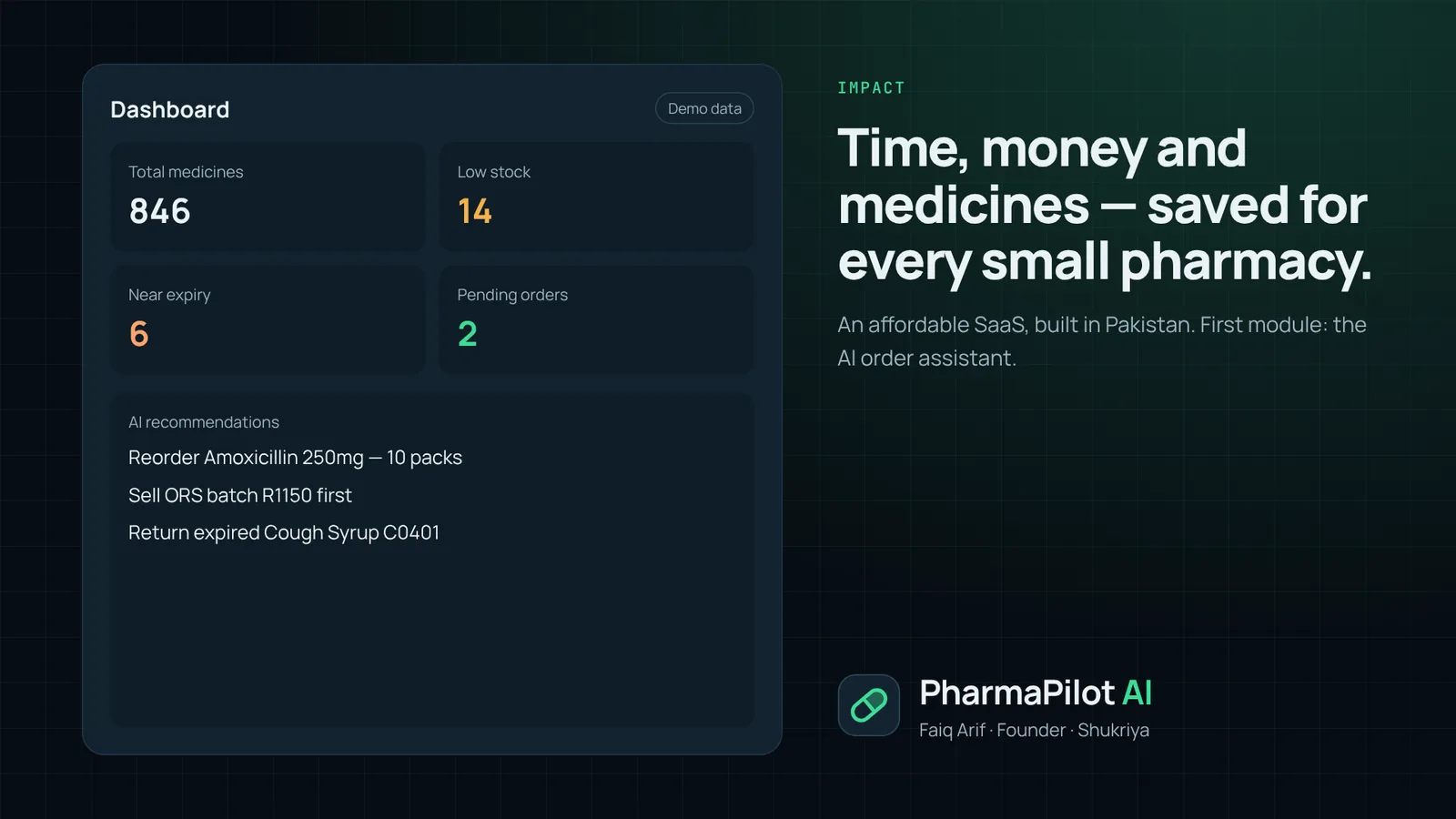
Most small pharmacies in Pakistan still run on a register, a calculator and the owner's memory. Artificial intelligence will not replace the pharmacist — but it can take over the slow, repetitive parts of the day.
What AI is actually good at in a pharmacy
AI is strongest at tasks that are repetitive, visual and rule-based. In a pharmacy, three stand out:
- Reading: turning a photo of a medicine box, a shelf, an invoice or a handwritten list into a typed list of medicines.
- Remembering: keeping track of every batch and its expiry date, without anyone flipping through a register.
- Drafting: preparing a separate purchase order for each distributor, ready to send on WhatsApp.
Why this matters for small pharmacies
Large chains can afford dedicated staff and expensive software. A single-counter pharmacy usually cannot. The owner checks the shelves, writes the order, phones or messages each distributor, and watches for expiring stock — often late at night after closing. Every one of those steps is where time is lost and mistakes happen: a medicine that ran out unnoticed, an extra carton ordered by mistake, or a batch that expired at the back of the shelf.
What AI should not do
Medicines are not ordinary products, so the rules have to be strict. A responsible pharmacy AI should never guess a medicine name, strength or quantity, should never send an order on its own, and should never suggest selling expired stock. It also should not give dosing advice — that belongs to the doctor and the pharmacist. In PharmaPilot AI's safety rules, every AI reading is a suggestion until a person confirms it.
What it looks like day to day
Instead of walking the shelves with a notebook, the pharmacist takes a few photos. The AI reads the medicines, compares today with yesterday, and shows what has gone missing — those become the order list. A minute of checking replaces a long evening of writing. You can try this flow in the Order Manager.
The bottom line
AI in the pharmacy is not about robots behind the counter. It is about giving the pharmacist back time — time that can go to customers instead of paperwork.